
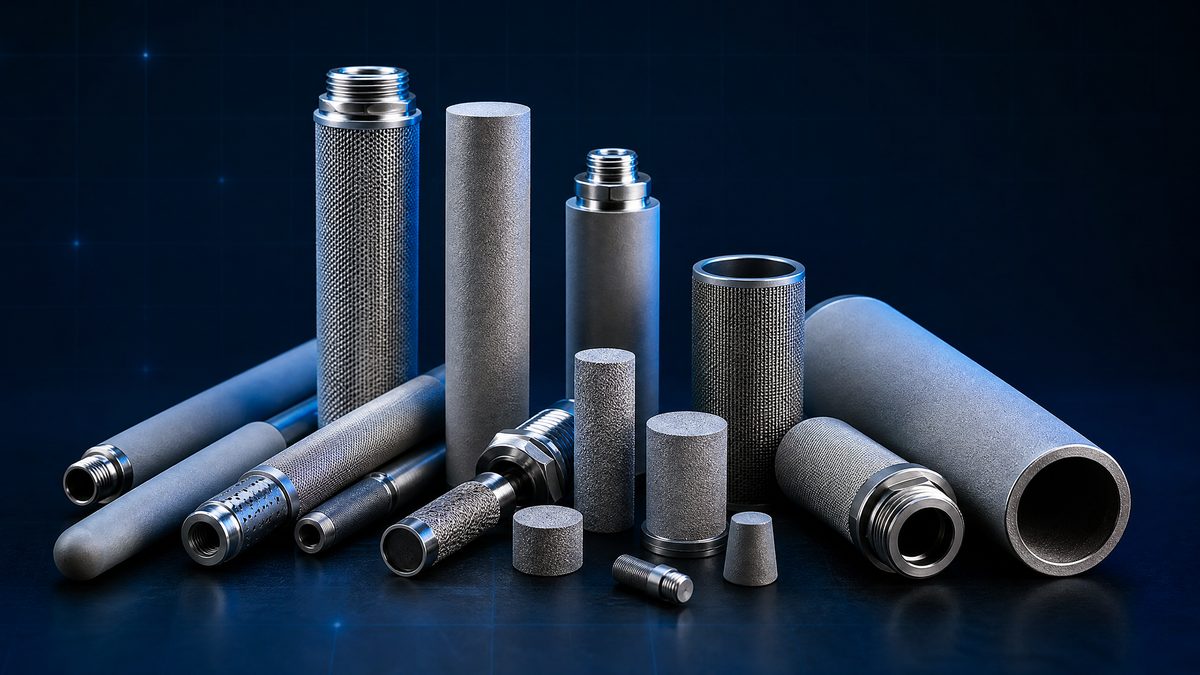
Sintered Wire Mesh
Multi-layer woven mesh vacuum-sintered into a rigid, dimensionally stable medium.
Dirt capacity depends on layer design and available surface area.
View full data
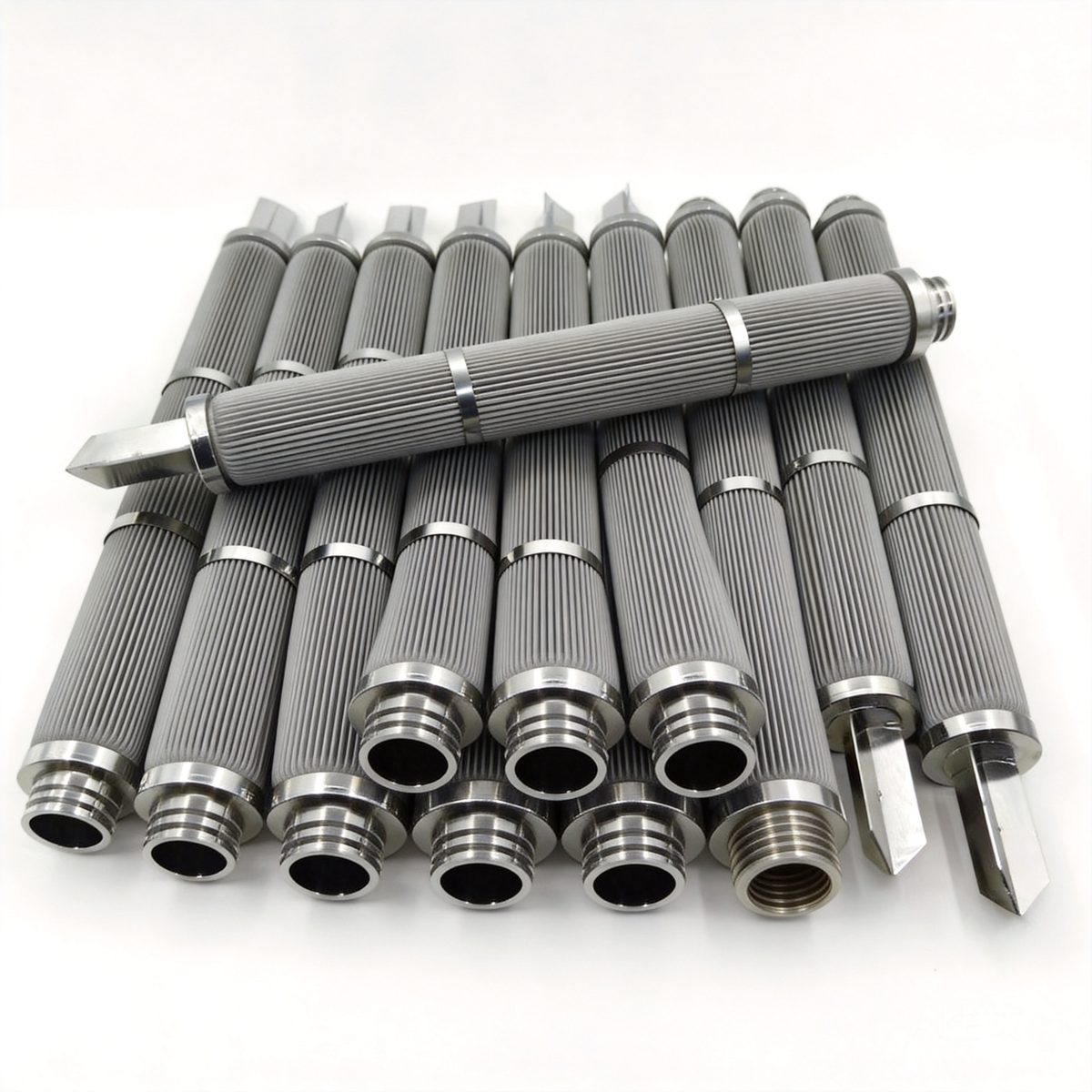
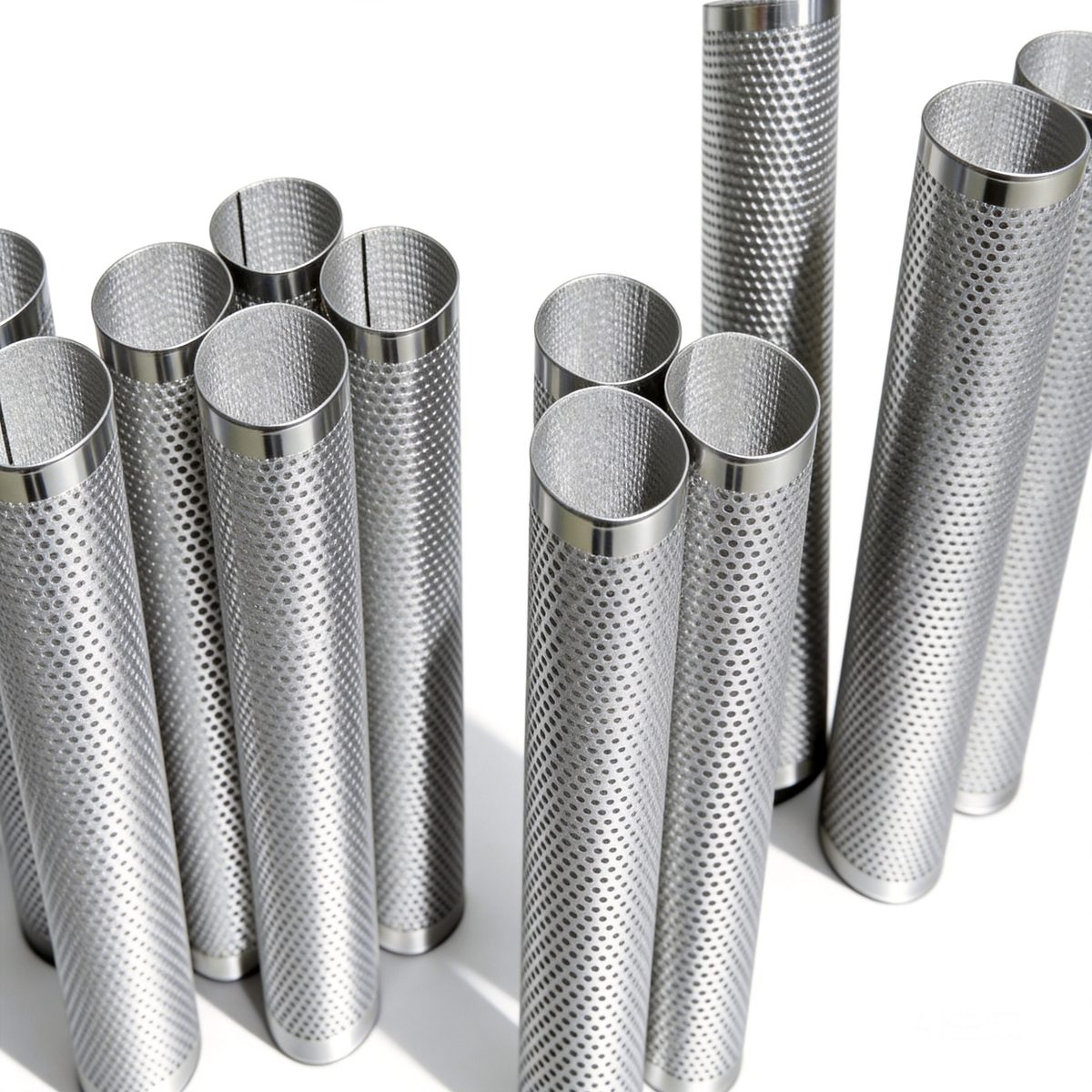
Stainless steel sintered mesh, sintered felt, SS pleated, perforated composite, SS powder sintered, copper powder sintered, and titanium rod elements. Working pressure up to 30 MPa. Working temperature up to 300°C.
JINLV metal and sintered filter elements are engineered for process conditions that polymer cartridges cannot withstand: high temperatures, high pressures, aggressive solvents, and abrasive media. The sintered wire mesh series uses standard 5-layer or multi-layer 316L stainless steel mesh vacuum-sintered into a rigid, dimensionally stable structure with filtration accuracy from 1-300 μm. Sintered metal felt uses 316L SS fiber felt with high porosity (up to 85%) for low pressure drop at high flow rates. Stainless steel pleated elements offer 5-10x the filtration area of equivalent cylindrical elements, rated to 30 MPa working pressure and 300°C operating temperature. Titanium rod elements cover 0.22-100 μm with excellent corrosion resistance for pharmaceutical and chemical applications. All metal elements are cleanable by backwash, ultrasonic cleaning, or chemical regeneration -- significantly reducing total cost of ownership versus disposable polymer cartridges.
Metal elements are selected not only for temperature and pressure, but also for regeneration and long-term process economics. Corrosion, differential-pressure direction, and cleaning method must be verified together.
Multi-layer woven mesh vacuum-sintered into a rigid, dimensionally stable medium.
Dirt capacity depends on layer design and available surface area.
View full dataSintered stainless-steel fibers provide high porosity and a tortuous filtration path.
Cleaning method must match the captured contaminant and felt construction.
View full dataWire mesh or metal felt is pleated to increase filtration area inside a limited housing envelope.
Pleat support, welding, and differential-pressure direction must be confirmed.
View full dataPerforated plate supports woven or sintered media against impact and severe pressure fluctuation.
Open area and support geometry affect pressure drop.
View full dataSintered metal powder forms a uniform three-dimensional porous structure.
Pressure drop and cleanability depend strongly on pore size and element thickness.
View full dataA compact porous structure commonly used for pneumatic exhaust and coarse filtration.
Not a universal substitute for stainless steel in corrosive processes.
View full dataPorous titanium provides a rigid, low-shedding structure with strong corrosion resistance.
Compatibility must still be checked against the actual chemical, temperature, and concentration.
View full dataBackwash, ultrasonic, chemical, and thermal cleaning are not equally suitable for every structure. Confirm contaminant type, pore architecture, and welded assembly limits first.
Alloy grade, working pressure, and temperature limits must be confirmed for the exact model. Category maximums must not be applied to every structure.
Technical blog
These are the most common process points where our customers deploy this product line. If your application isn't listed, contact us -- we likely have a suitable variant.
Provide the media and concentration, temperature, pressure and differential-pressure direction, target rating, cleaning method, flow direction and element geometry.