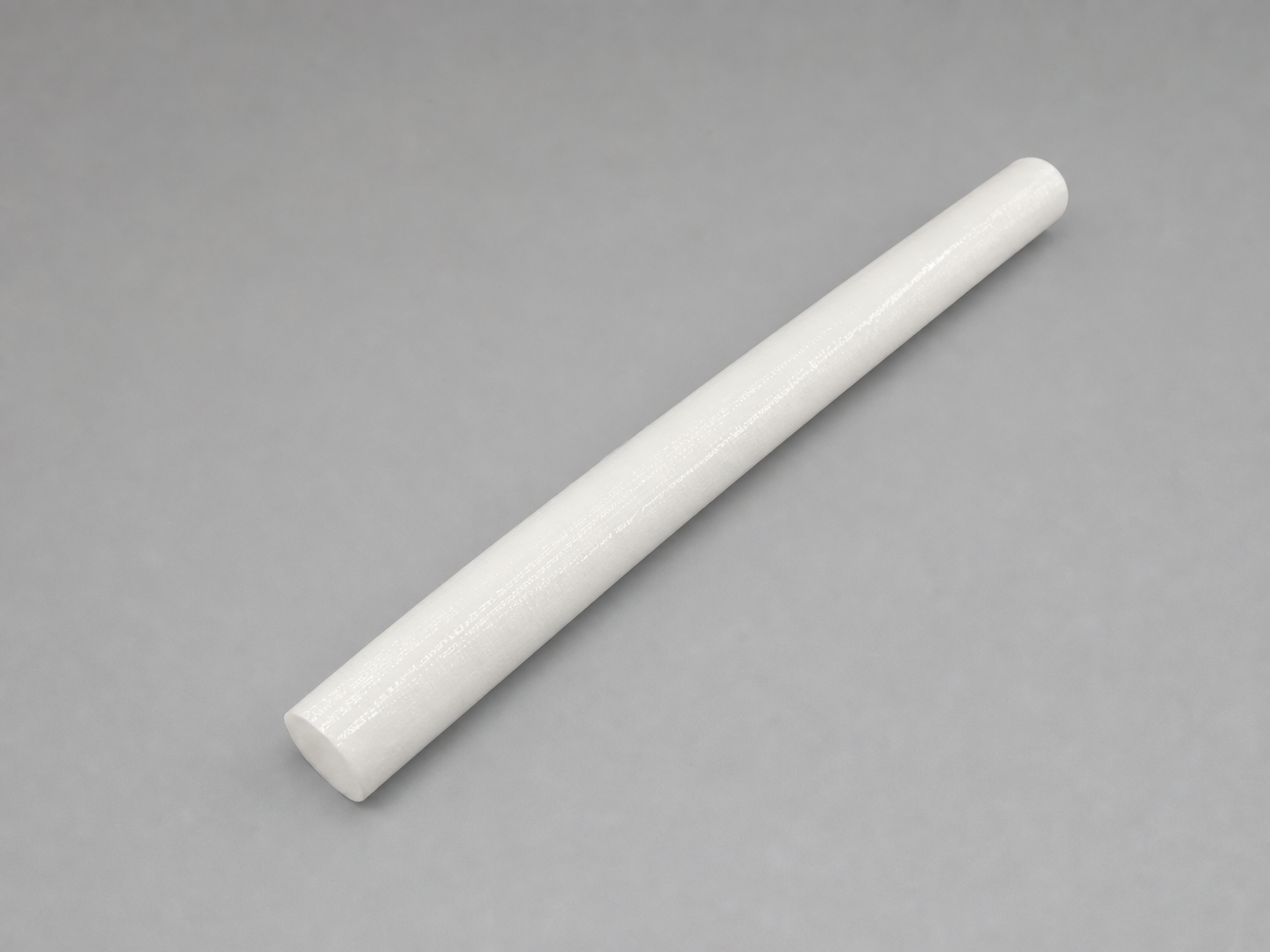
Melt-Blown PP Cartridge
Priority recommendationStandard configuration: 100% polypropylene (PP), seamless thermally bonded construction.For standard aqueous solutions, melt-blown cartridges offer strong cost efficiency and cleanliness.
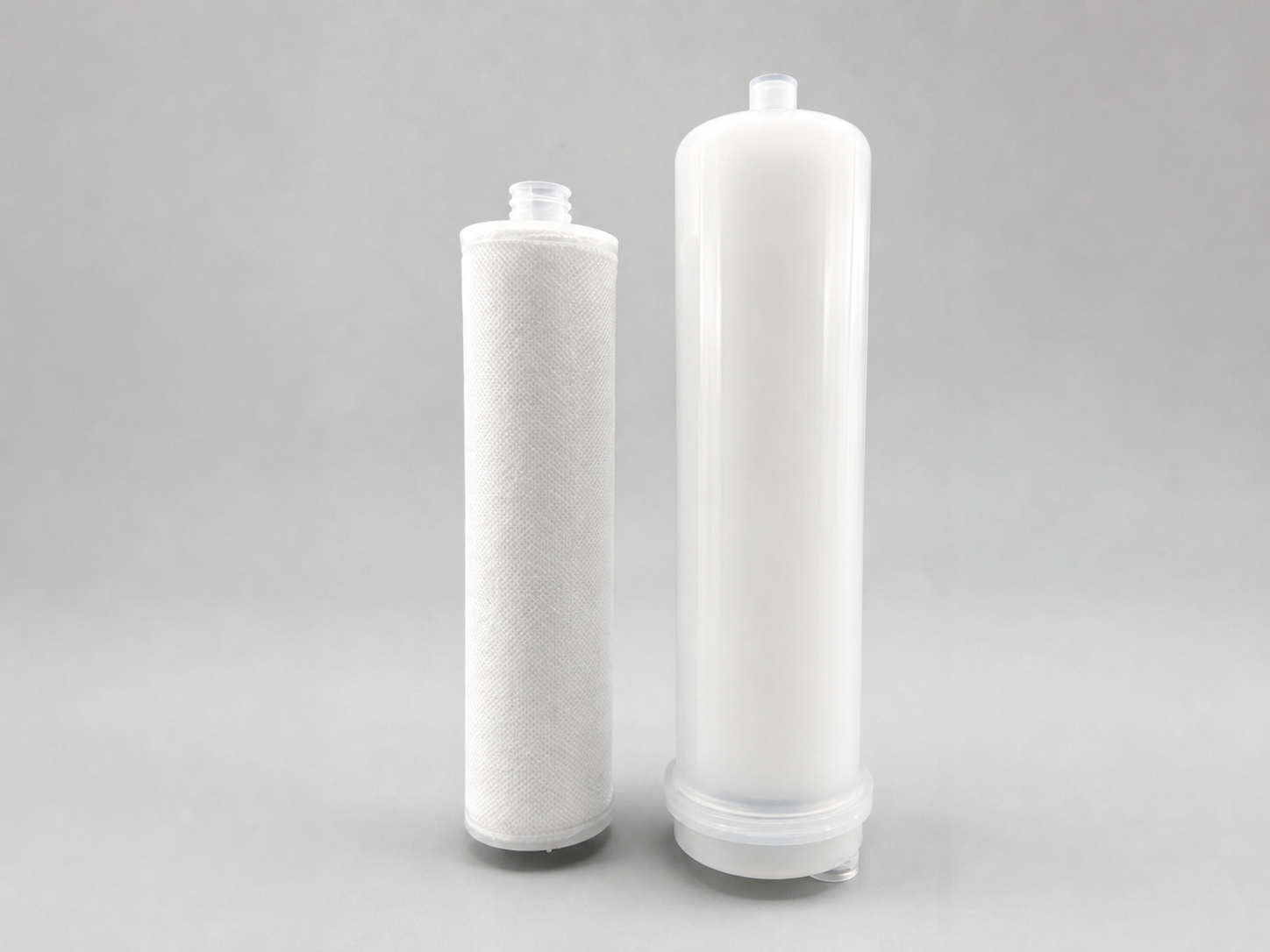
Meltblown PP and JC deep-layer wound construction. Gradient density structure — coarser outer layer, finer inner layer. Ratings 1–120 μm. Max temp 60°C.
JINLV depth and wound cartridges use a three-dimensional fiber matrix to trap particles throughout the full depth of the media, not just on the surface. The meltblown PP cartridge is formed by thermally bonding polypropylene fibers without any chemical binders -- the resulting gradient structure (coarser fibers on the outside, finer fibers near the core) progressively captures particles of decreasing size, maximizing dirt-holding capacity and extending service intervals. The JC deep-wound cartridge uses a precision winding process to build up alternating layers of fiber at controlled angles, creating a tortuous path that captures particles while maintaining low pressure drop. Both types are available in 10 in and 20 in lengths with DOE, 222, and 226 connections. Typical applications include pre-filtration of pharmaceutical process water, food and beverage ingredient streams, and fine chemical liquids with high particulate loads.
Selection is not only about price. Adjust viscosity, maximum operating temperature and purity requirements to compare both depth-filtration structures.
Move the three controls to update suitability and configuration guidance in real time.
Selection notice: this tool provides a preliminary comparison and does not guarantee service life or a savings multiple. Confirm the actual fluid, differential pressure, flow, chemical compatibility and sample test. Cotton, glass-fiber and stainless-steel-core constructions are custom options requiring separate confirmation.
Compare construction, contaminant loading, fluid viscosity, temperature and customization boundaries.
Read technical guideCheck flow, viscosity, loading, installation and housing conditions before replacing or resizing the element.
Read technical guideThese are the most common process points where our customers deploy this product line. If your application isn't listed, contact us -- we likely have a suitable variant.
Send us your housing model, flow rate, and target micron rating. We'll confirm compatibility and lead time.